

Is Your Event Beautiful—or Does Your Audience Actually Feel It?
An event can take six months to plan, hundreds of decisions to make, dozens of vendors to coordinate and an entire team working behind the scenes—and still be reduced to a few pretty photographs on Instagram the next morning. The stage looked stunning. The lighting was perfect. The flowers were beautiful. The bride looked incredible. The ballroom was transformed. And yet, someone scrolling past the post thinks: “Looks nice.” That's it. No curiosity. No emotional connection. No sense of what the company actually did. And certainly no immediate thought of, “I want them to plan my event.” That is the problem with treating social media as a digital photo album. Event management companies aren't simply selling décor, venues, flowers, entertainment or logistics. They're selling the ability to turn someone's vision into an experience—while handling the hundreds of details the client doesn't want to worry about. That is a much more powerful story. And social media should tell it. Because your Instagram shouldn't merely document what happened after months of planning. It should make someone imagine what their own event could feel like in your hands. That is where social media marketing for event management companies becomes far more than showcasing photographs. It becomes a way to build desire, establish credibility, demonstrate expertise and ultimately turn attention into inquiries.
Why Should an Event Company's Instagram Be More Than a Portfolio?
A portfolio answers one question: “What have you done?” That's useful. But a prospective client has several other questions running through their mind: Can they understand what I want? Will they actually listen to me? Can they handle the pressure? Will they solve problems when something goes wrong? Do they have the taste I'm looking for? Can they execute an event at this scale? Will they make the entire process easier for me? Can I trust them with something this important? Those questions don't get answered by posting another photograph of a beautifully decorated stage. They get answered through storytelling. A strong social media presence should show the thinking, process, personality, expertise and outcome behind the event. Because people don't hire event management companies simply because they can create attractive spaces. They hire them because they want someone capable of making an important occasion feel effortless, intentional and memorable. A portfolio says: “Here is what we made.” A strategic social media presence says: “Here is what we understand, how we work and what we could create for you.” That is a considerably stronger proposition.
What Are Event Management Companies Actually Selling?
At a functional level, event companies may provide planning, décor, production, venue coordination, entertainment, guest management, logistics, vendor management and on-ground execution. But clients rarely think about those services as isolated line items. They're thinking about the experience. A couple planning a wedding may be imagining the entrance their guests will remember. The moment their parents walk into the venue. The décor they've saved on Pinterest for months. The photographs they'll look back at years later. The feeling of seeing their vision become real. A corporate client may be imagining something different. They want an event that represents their company professionally. They want guests to move through the experience smoothly. They want the production to work. They want the event to feel organised. And most importantly, they don't want to spend the entire day solving problems. So the real product isn't simply event management. It's confidence. It's execution. It's creativity. It's problem-solving. It's personalisation. It's the reassurance that someone capable is in control. That's what social media needs to communicate. Instead of repeatedly saying: “We create beautiful events.” Show people what makes those beautiful events possible. Show the decisions. Show the transformation. Show the details. Show the people. Show the thinking. Show the emotion. Show the result. Because when the audience understands the experience you're capable of creating, the service suddenly becomes much more valuable.
Why Is Showing Only the Final Event a Missed Opportunity?
Because the final event hides almost everything that makes an event management company valuable. Think about a luxury wedding. A guest sees a breathtaking venue. But they don't see the months of planning behind it. They don't see the initial conversation with the couple. They don't see the moodboards. They don't see venue discussions. They don't see vendor coordination. They don't see the countless revisions. They don't see the last-minute change. They don't see the problem that appeared two hours before guests arrived. They don't see the team figuring out how to solve it. They see the final result. And while the final result is important, it doesn't necessarily demonstrate capability. This is why behind-the-scenes content is so valuable for event management companies. A final photograph communicates aesthetics. The process communicates competence. An empty venue transforming into a finished celebration shows scale. A planner discussing a design decision shows expertise. A team preparing the space shows coordination. A last-minute adjustment shows problem-solving. A client reaction shows satisfaction. A venue walkthrough shows attention to detail. Together, these moments create something a single polished photograph cannot: proof. And proof makes people trust you.
How Can Event Companies Turn the Planning Process Into Content?
This doesn't mean filming every second of the planning process. Nobody needs a 14-minute video explaining how the chairs were arranged. The goal is to identify moments that reveal how the experience came together. Imagine a Reel beginning with an empty venue. Then the first structural elements arrive. Lighting is installed. Décor begins taking shape. The tables are styled. The stage comes together. The finishing touches are added. And finally, the venue is revealed. That's already visually satisfying. But now imagine the Reel also explaining the creative direction: The couple wanted something contemporary but intimate. The venue had a large open space, so the design needed to make it feel warmer. The colour palette was selected to complement the architecture. Suddenly, the audience isn't just watching a transformation. They're watching a decision-making process. That's storytelling. And that's where event content becomes marketing. At SocialUp Marketing, this is an important distinction in our approach to content strategy. We don't simply ask: “What footage do we have?” We ask: “What can this footage make the audience understand, feel or imagine?” Because sometimes an event company doesn't have a content shortage. It has a storytelling shortage.
Should Event Companies Show the Process or the Final Result?
Both—Because They Do Different Jobs. The final result creates aspiration. The process creates confidence. The final reveal says: “Look how beautiful this event became.” The behind-the-scenes content says: “Look at how carefully we made it happen.” One makes people want the outcome. The other makes them trust the people capable of delivering it. That's why an effective social media strategy for event management companies should combine different types of content rather than repeatedly posting final-event photographs. You could have: Cinematic event reveals for aspiration, Behind-the-scenes Reels for credibility, Client testimonials for social proof, Planning tips for authority, Team content for personality, Venue transformations for visual impact, FAQs for education, Trend-led content for reach, Event concepts for inspiration, Case studies for deeper trust. Each format has a different purpose. That's important because not every post needs to sell. Some posts attract attention. Some build trust. Some educate. Some create desire. Some demonstrate expertise. Some make the audience remember you. Some move a potential client closer to an inquiry. The strategy comes from knowing which job each piece of content needs to perform.
Why Does Every Event Category Need Its Own Social Media Strategy?
Because the person planning a luxury wedding is not necessarily looking for the same things as a corporate event client. Both may hire an event management company. Their decision-making process can still be completely different. A luxury wedding audience may care about: Exclusivity. Personalisation. Aesthetics. Emotion. Attention to detail. Aspirational experiences. A corporate client may care more about: Professionalism. Reliability. Scale. Execution. Timelines. Brand representation. A destination wedding audience may want to see: The location. Travel experience. Venue possibilities. Guest experience. Cultural elements. Logistical ease. And someone planning a private celebration may respond more strongly to energy, personality, relatability and memorable moments. If all these audiences receive the exact same content, the brand eventually starts sounding generic. That doesn't mean the brand identity should change for every audience. It means the communication strategy should adapt. Your brand should remain recognisable. But the story you tell should answer the questions that matter to the person you're trying to reach. That's strategic social media management.
How Can Reels Make an Event Feel Real?
Events are inherently sensory. That's what makes short-form video particularly powerful for the industry. A photograph can show a beautifully designed ballroom. A Reel can show the doors opening, the lights coming on, the music beginning and guests walking in. A photograph can show a bride. A video can capture her entrance, her expression and the reaction of everyone around her. A photograph can show a table arrangement. A Reel can move through the details and recreate the atmosphere. Video allows the audience to experience movement. And movement creates emotion. But there is an important distinction. Putting 12 beautiful clips together with trending audio isn't automatically storytelling. Before creating a Reel, ask: What should the viewer feel? Should they feel inspired? Should they feel impressed? Should they understand the scale of the event? Should they notice the detail? Should they trust the company? Should they imagine themselves there? Should they understand a problem the company solved? Should they simply want to see the final reveal? Once the objective is clear, the footage becomes much easier to structure. Because beautiful footage is only raw material. Storytelling is what turns that footage into marketing.
How Should Event Companies Use Instagram Trends?
Follow the Trend, Not the Crowd.
Trends can be useful. But blindly following every trend is one of the fastest ways to make a premium brand look ordinary. An event management company shouldn't jump onto a trending audio simply because it has millions of views. The better question is: Does this trend help us communicate something relevant about the brand? For a luxury event company, some trends can make the brand feel current and relatable. Others can make it look forced. A trend that works brilliantly for a mass-market celebration brand might completely undermine the positioning of a premium wedding planner. That's because trend relevance depends on brand context. A trend should be treated as an opportunity, not an obligation. Sometimes the right move is to participate. Sometimes it's to take the underlying format and reinterpret it. And sometimes the smartest decision is to ignore it entirely. Because understanding social media isn't the same as following everything social media is doing. The algorithm can influence your format. It should not dictate your identity.
How Can Event Companies Build Trust Before a Client Sends a DM?
Think about the decision they're making.
Someone hiring an event management company may be trusting that company with a significant amount of money, months of preparation and one of the most important days of their life. A corporate client may be trusting it with a major brand event and hundreds or thousands of guests. That's not a casual purchase. So a beautiful Instagram feed can attract attention. But attention isn't trust. Trust is built through repeated evidence. Show the work. Show the process. Show the people. Show client reactions. Show testimonials. Show problem-solving. Show expertise. Answer common questions. Explain decisions. Demonstrate consistency. Let potential clients see that the company isn't simply capable of making an event look beautiful. It knows how to make the entire experience work. This becomes even more important for premium event management companies. High-value clients aren't necessarily looking for the loudest brand online. They're often looking for the one that makes them think: “These people know exactly what they're doing.” That reaction is worth considerably more than another generic engagement spike.
Can Educational Content Really Help an Event Management Company Get Clients?
Absolutely. And it's one of the most underused content opportunities in the industry. If every post says: “We create stunning events.” Eventually, the audience stops learning anything. Educational content changes the relationship. Instead of simply telling people you're experienced, you demonstrate it. An event company can create content around questions such as: How early should you book a wedding planner? What should couples consider before choosing a venue? How much décor is too much for a particular venue? What should you ask an event planner before signing a contract? How can you build a realistic event timeline? What are the most common mistakes couples make while planning a destination wedding? How should décor work with the architecture of the venue? What should corporate brands consider when planning large-scale events? Now the audience isn't simply seeing your work. They're learning from you. And that creates authority. Someone who repeatedly provides useful answers begins to look like someone who understands the industry. And when the time comes to hire an event management company, expertise feels safer than empty self-promotion.
What Should Premium Event Management Look Like on Social Media?
Luxury Isn't a Colour Palette. Gold typography doesn't automatically make a brand luxurious. Neither does slow-motion footage of flowers. Neither does using the word premium in every caption. Premium positioning is built through consistency. The visuals need to feel intentional. The messaging needs to feel confident. The storytelling needs to feel considered. The content needs to demonstrate expertise. The audience needs to understand who the brand is for. And perhaps most importantly, the brand shouldn't look desperate to prove that it is premium. A truly premium event management company doesn't need to repeatedly announce: “WE ARE LUXURY.” Its social presence should make the audience conclude: “This feels premium.” That conclusion is much more powerful. At SocialUp Marketing, this is why we look beyond individual posts. A single beautiful Reel isn't enough. The entire social presence needs to gradually communicate: This brand has taste. This brand understands people. This brand understands events. This brand pays attention to detail. This brand can execute. That's what premium positioning actually looks like.
What Can Event Companies Learn From Jalaj Corporation?
When the Event Experience Becomes the Content. Jalaj Corporation is an event management company specialising in premium weddings, corporate events and social celebrations, with a focus on affluent Indian and NRI audiences across India and international markets including Dubai, Thailand and Malaysia. The challenge wasn't simply to show that Jalaj Corporation creates beautiful events. The larger objective was to establish the company as a trusted premium event management brand—one capable of attracting high-value clients who want professional execution without losing the personal character of their celebration. That meant the social media presence needed to communicate more than décor. It needed to communicate the experience and expertise behind the décor. At SocialUp Marketing, we developed a premium and visually cohesive social media presence around Jalaj Corporation's positioning, including its signature pink palette and sophisticated typography. But aesthetics were only one layer. The content strategy incorporated multiple formats and purposes, including hook-led creatives, trend-driven carousels, informative static posts and voiceover Reels designed to communicate the company's services and value proposition. More importantly, the content introduced solution- and suggestion-based ideas that addressed real event-planning questions. Why? Because an event management company shouldn't simply claim: “We know events.” It should give the audience evidence that it understands them. If potential clients are wondering how to plan a destination wedding, what to consider before selecting a venue or how to create a memorable guest experience, the brand has an opportunity to answer those questions before the client ever sends a DM. That builds authority before the sales conversation begins. The strategy also extended beyond organic social media. Paid campaigns were used to target NRI audiences across relevant international markets, helping Jalaj Corporation reach potential high-intent audiences beyond its immediate geographical presence. The larger lesson from the work is simple: Beautiful content gets attention. Strategic content gives that attention a reason to become trust. And trust is what eventually makes an event management company worth considering.
Why Should Event Companies Stop Chasing Beautiful Content Alone?
Because beautiful content has become easy to produce. Everyone has access to high-quality cameras. Everyone has editing applications. Everyone can use templates. Everyone can find trending audio. AI can now generate visual concepts in seconds. So beauty alone is no longer much of a competitive advantage. The real question is: What is the beauty communicating? A beautiful stage can communicate scale. A beautifully shot ceremony can communicate emotion. A detailed décor shot can communicate craftsmanship. A transformation Reel can communicate capability. A client reaction can communicate trust. A planning video can communicate expertise. That's when visual quality becomes strategically useful. Otherwise, you risk building something that looks impressive but says very little. And eventually, the feed becomes what it was never supposed to be: A Pinterest board with a logo. Pretty pictures. No narrative. No positioning. No differentiation. No meaningful reason for someone to remember the brand. Aesthetic content can stop the scroll. Strategy determines what happens after the scroll.
What Should an Event Management Company's CTA Actually Say?
Let's be honest. Some CTAs sound like they're shouting from the bottom of a sales funnel: “BOOK NOW!!!” “DM US TODAY!!!” “CONTACT US FOR MORE DETAILS!!!” There's nothing inherently wrong with asking people to take action. But the CTA needs to make sense within the story you've just told. If you've shown how a couple's vision was transformed into an actual wedding, invite viewers to discuss their own vision. If you've explained destination wedding planning, offer a consultation. If you've demonstrated how your team solves event-planning challenges, make it easy for a potential client to speak to someone. The CTA should feel like the next logical step, not a desperate interruption. Because the content should do most of the convincing. The CTA simply opens the door.
What Should Event Management Companies Actually Measure?
Views matter. Reach matters. Follower growth matters. Likes matter. Engagement matters. But none of these numbers should be examined without context. An event management company should also monitor: Profile visits. Saves. Shares. Comments. DMs. Website activity. Enquiries. And most importantly: The quality of those enquiries. Imagine two scenarios. One Reel gets 500,000 views from people who have no interest in hiring an event planner. Another gets 25,000 views and generates several genuine enquiries from people planning premium weddings. Which one is more valuable? The answer depends on the objective—but if the goal is attracting clients, the second result could be significantly more meaningful. That's why social media strategy cannot be reduced to chasing whichever number looks largest. The biggest number isn't automatically the best result. The right audience taking the right action is what matters.
Why Should Event Companies Stop Copying Their Competitors?
Because competition can very quickly become imitation. You see another event planner's Reel performing well. You recreate it. Another competitor posts a carousel that gets strong engagement. You recreate that. Someone uses a particular audio. You use it too. Someone changes their grid. You change yours. Eventually, everyone starts looking identical. That's not differentiation. Your competitors can tell you what the market is doing. They shouldn't determine what your brand becomes. Instead of asking: “How do we copy this?” Ask: “Why is this working?” Maybe the Reel works because of the transformation. Maybe the hook creates curiosity. Maybe the format demonstrates expertise. Maybe the content taps into an audience concern. Understand the underlying principle. Then translate it into something that belongs to your brand. That's how you stay relevant without becoming interchangeable.
What Does Strategic Social Media Marketing Actually Look Like for an Event Company?
It starts long before the first post is designed. First: Understand the Brand: What does the company stand for? What kind of events does it specialise in? What makes its approach different? What kind of clients does it want? What kind of clients does it not want? What should people remember about the brand? Then: Understand the Audience: Who is making the decision? What are they worried about? What are they dreaming about? What would make them trust an event company? What objections could prevent them from enquiring? What does premium mean to them? Then: Build the Content Strategy: What should attract attention? What should establish expertise? What should create aspiration? What should demonstrate capability? What should build trust? What should generate enquiries? Then: Create the Content: The Reels. The carousels. The photographs. The scripts. The captions. The testimonials. The behind-the-scenes content. The educational pieces. The campaigns. Then: Analyse and Refine: What worked? What didn't? Which audiences responded? Which formats generated meaningful interest? Which content should be developed further? What should change? That process is fundamentally different from: “How many posts do we need this month?” Because the number of posts is only one part of the equation. The thinking behind those posts is what makes them valuable.
Can Social Media Make Someone Want an Event Before They Even Know What They Want?
Absolutely. And this may be one of the most powerful opportunities for event management companies. People often don't know exactly what they want until they see a possibility. A couple may believe they want a traditional wedding. Then they see a beautifully executed contemporary celebration. Suddenly, they're reconsidering everything. A corporate brand may assume it needs a standard conference. Then it sees an experiential event that turns the entire format into something memorable. Now the possibilities have changed. That's the power of visual storytelling. You're not simply showing people what you've already created. You're helping them imagine what could exist. And imagination creates desire. The audience starts mentally placing themselves inside the experience. They picture their own venue. Their own guests. Their own entrance. Their own celebration. Their own brand event. That's when social media stops being documentation. It becomes pre-experience marketing. You're allowing people to emotionally experience something before they buy it. For an event management company, that is incredibly powerful.
Why Is Behind-the-Scenes Content So Important for High-Value Events?
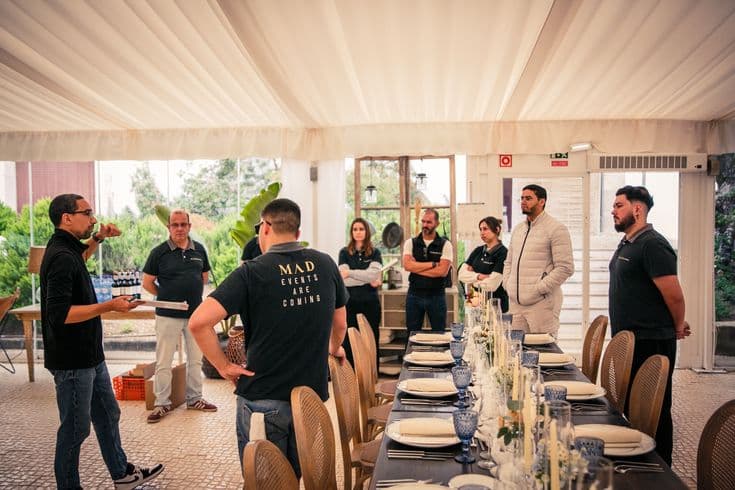
Because high-value purchases require more than aspiration. They require reassurance. A beautiful final photograph tells a prospective client: “They can make things look good.” Behind-the-scenes content can tell them: “They know how to make things happen.” Show the team arriving before sunrise. Show the venue being prepared. Show the production checks. Show the décor being assembled. Show the final walk-through. Show the team coordinating with vendors. Show the last-minute fixes. Show the moment the doors open. Show the client seeing the finished venue for the first time. These moments humanise the company. They also demonstrate the invisible work that clients are actually paying for. Because event management is often judged by the final result, while its real value is created through everything that happens before the final result. Social media gives brands an opportunity to make that invisible value visible.
What Makes an Event Company's Social Media Memorable?
Not simply beauty. Not simply frequency. Not simply trends. Not simply followers. A memorable social media presence has a recognisable point of view. It has a visual identity. It has a voice. It has recurring themes. It understands its audience. It communicates expertise. It creates emotion. It tells stories. And, most importantly, it gives people a reason to remember the brand after they've closed Instagram. Someone should be able to encounter your content and eventually think: “I've seen this company before.” “I know what kind of events they create.” “They seem to understand exactly what I'm looking for.” “I'd trust them with this.” That is brand building. And it doesn't happen because you posted 20 times this month. It happens because the 20 pieces of content collectively communicated something meaningful.
What Should Event Management Companies Do With Their Existing Event Content?
Don't immediately assume you need another photoshoot. You may already be sitting on months or years of usable material. The problem may simply be that you're using it in one-dimensional ways. One wedding could become: A final reveal Reel. A before-and-after transformation. A planning story. A décor breakdown. A client testimonial. A “5 details you may have missed” Reel. A venue transformation. A design inspiration carousel. A behind-the-scenes sequence. A case study. A founder-led explanation. One event doesn't have to equal one post. The content isn't finished when the event is finished. A well-planned event can become an entire content ecosystem. This is where strategic content planning can dramatically increase the value of the content a company already owns. Instead of constantly asking: “What should we post?” Start asking: “What stories are already hidden inside the work we've done?” That's a much better question.
Why Should Your Social Media Feel as Carefully Planned as Your Events?
Think about what an excellent event management company does. It doesn't randomly place things around a venue. It doesn't choose décor without considering the setting. It doesn't plan entertainment without considering the audience. It doesn't create a timeline without thinking about the guest journey. Every element has a purpose. Social media should work the same way. The visual identity has a purpose. The content pillars have a purpose. The Reels have a purpose. The educational posts have a purpose. The campaign has a purpose. The CTA has a purpose. The platform strategy has a purpose. And the individual pieces need to work together. Your social media should be planned with the same intentionality you bring to your events. If your business sells beautifully orchestrated experiences, its digital presence shouldn't feel like a collection of disconnected posts.
Don't Just Show People the Event. Make Them Imagine Their Own.
An event takes months of work. There is a vision. There are meetings. There are moodboards. There are negotiations. There are vendors. There are revisions. There are timelines. There are last-minute problems. There are hundreds of decisions nobody attending the event will ever know happened. And then, finally, there is the moment everyone sees. Why reduce all of that to a photograph? A photograph can show the result. A Reel can show the atmosphere. A behind-the-scenes story can show the process. A case study can show the thinking. A testimonial can show the experience. Educational content can show the expertise. And together, these pieces can show something far more important: why someone should trust your company with their event. That's the real opportunity for social media marketing for event management companies. Don't simply tell people: “Look what we've done.” Show them: “Here's how we think.” “Here's how we work.” “Here's what we notice.” “Here's what we solve.” “Here's what your experience could look like.” Because people don't book event management companies merely because they saw a pretty stage on Instagram. They book because they began to believe: “These are the people who could make my vision real.” And that's the shift every event management company should be aiming for. Your social media shouldn't be a scrapbook of events you've already completed. It should be a window into the experiences you're capable of creating next. Don't just show the event. Sell the feeling of being there. Show the thinking behind the beauty. Make the audience imagine themselves inside the experience. Because when someone stops seeing your Instagram as a portfolio and starts seeing it as a preview of what you could create for them, social media stops being documentation. It becomes demand generation. And that is when an event management company's social media starts doing what its events already do so well: turning an idea into an experience people want to be part of.